
Ozonated Olive Oil Science: Understanding Ozone (O₃) and Its Chemistry
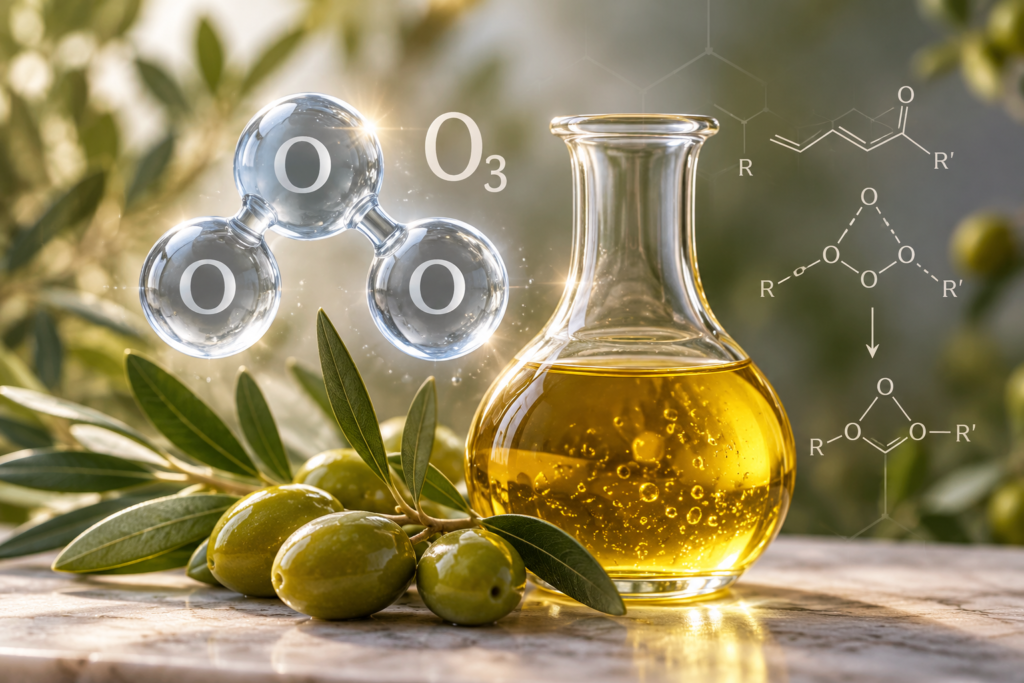
Ozone, scientifically represented as O₃, is a molecule composed of three oxygen atoms. Unlike ordinary oxygen (O₂), which consists of two oxygen atoms, ozone contains a third oxygen atom that makes it highly reactive.
Ozone occurs naturally in Earth’s atmosphere, where the ozone layer helps protect life from harmful ultraviolet radiation. It can also be produced using specialized ozone-generating equipment.
The scientific study of ozone includes its molecular structure, chemical reactions, applications in water treatment, industrial processes, and interactions with organic substances such as vegetable oils.
Table of Contents
The Chemistry of Ozonated Olive Oil
Ozonated olive oil is produced by introducing ozone gas into olive oil under controlled conditions.
Olive oil contains unsaturated fatty acids, particularly oleic acid. When ozone reacts with the carbon-carbon double bonds in these fatty acids, a series of chemical reactions occurs.
These reactions can produce compounds including ozonides, peroxides, aldehydes, and other oxygen-containing substances.
The resulting oil differs chemically and physically from untreated olive oil. Depending on the manufacturing process, it may become thicker and develop a distinctive odour.
The composition of the finished product depends on several factors, including the quality of the starting oil, ozone concentration, reaction time, temperature, and production methods. Ozonated olive oil science helps explain how ozone reacts with the natural fatty acids in olive oil to form new chemical compounds. Ozonated olive oil science provides valuable insight into how these chemical reactions influence the finished product.
What Are Ozonides?
Ozonides are chemical compounds formed during reactions involving ozone. In ozonated vegetable oils, certain ozonides contain a ring structure with three oxygen atoms.
Researchers study these compounds because they contribute to the distinctive chemical properties of ozonated oils.
Ozonated olive oil does not simply contain extra oxygen dissolved in ordinary olive oil. It contains new compounds produced by chemical reactions between ozone and the oil’s fatty acids. Ozonated olive oil science examines the formation of ozonides and other compounds produced when ozone reacts with the unsaturated fatty acids naturally present in olive oil.
Scientific Research Into Ozonated Olive Oil
Researchers have investigated ozonated oils for their chemical characteristics, stability, antimicrobial properties, and potential applications in skin-care formulations. Laboratory studies have demonstrated antimicrobial activity against certain microorganisms. However, laboratory results do not automatically establish that a product can treat or cure infections in humans.
Research continues into formulation methods, product stability, skin compatibility, and safety. Ozonated olive oil science also examines how different production methods influence the chemical composition, stability, and characteristics of the finished oil.
Ozonated olive oil science continues to explore how ozone-treated oils behave under different laboratory conditions and how their chemical properties may influence future research.
Measuring the Quality of Ozonated Oils
Scientists use several measurements to characterize ozonated oils.
Peroxide Value: Measures certain peroxide compounds formed during oxidation.
Iodine Value: Helps measure changes in the unsaturated bonds within fatty acids.
Viscosity: Measures how thick an oil becomes during processing.
Acidity: Helps characterize chemical changes and certain oxidation by-products.
Chemical Analysis: Laboratory techniques such as gas chromatography and infrared spectroscopy help researchers identify changes in chemical composition.
These measurements help distinguish different formulations and manufacturing processes.
Scientific References and Research Links
The following publications provide additional information about ozone chemistry, ozonated vegetable oils, and their potential applications.
1. Ozonated Oils as Antimicrobial Systems in Topical Applications
A scientific review discussing the chemistry, characterization, antimicrobial research, and topical applications of ozonated oils.
https://pmc.ncbi.nlm.nih.gov/articles/PMC7024311
2. Olive Oil with Ozone-Modified Properties and Its Application
Research examining chemical changes in olive oil after ozonation and its potential use in cosmetic formulations.
https://pmc.ncbi.nlm.nih.gov/articles/PMC8196576
3. Ozone and Ozonated Oils in Skin Diseases: A Review
A review of ozonated oil chemistry, analytical testing, and research concerning skin applications.
https://pmc.ncbi.nlm.nih.gov/articles/PMC2910505
4. Exploring Ozonated Vegetable Oils as Antimicrobial and Functional Agents in Food Systems
A review examining chemical properties, antimicrobial findings, manufacturing variability, and research limitations.
https://pmc.ncbi.nlm.nih.gov/articles/PMC13257085
5. U.S. Environmental Protection Agency — Health Effects of Ozone
Information explaining the health risks associated with inhaling ozone gas.
https://www.epa.gov/ozone-pollution-and-your-patients-health/health-effects-ozone-general-population
Understanding the Difference Between Ozone Gas and Ozonated Oil
Ozone gas and ozonated olive oil are not interchangeable.
Ozone gas is a reactive substance that can damage the respiratory system when inhaled. Ozonated olive oil is a chemically modified oil containing products formed through reactions with ozone.
Scientific findings about ozone gas cannot automatically be applied to ozonated oil, and findings about one ozonated formulation may not apply to every other formulation.
Our Commitment to Scientific Information
At Earthonated, we believe customers should have access to information about the chemistry and research behind ozonated olive oil.
Our O3 Science page is intended to provide educational material and links to published scientific literature so visitors can explore the subject and examine the evidence for themselves.
Disclaimer
This information is provided for educational purposes only. Research findings do not establish that Earthonated products diagnose, treat, cure, or prevent disease. This information is not a substitute for professional medical advice.
Naturally Crafted Products for Everyday Living
Discover our naturally crafted products, made with carefully selected ingredients, quality craftsmanship, and a commitment to purity
Experience
Over 3 Decades of Experience
Years of dedicated experience providing exceptional quality, reliable products, and a commitment to customer satisfaction.
Ingredients
Naturally Sourced
Carefully selected organic ingredients deliver exceptional purity, natural quality, and consistency in every product.
Glass Packaging
Product Integrity
Our products are carefully packaged in genuine glass containers to preserve freshness, purity, and product integrity.
O₃ Science
Explore our products, discover the science behind ozonated olive oil, and find helpful information. We’re here to answer your questions and help you learn more.
Visit our Contact Us page for additional information or assistance with Earthonated products.